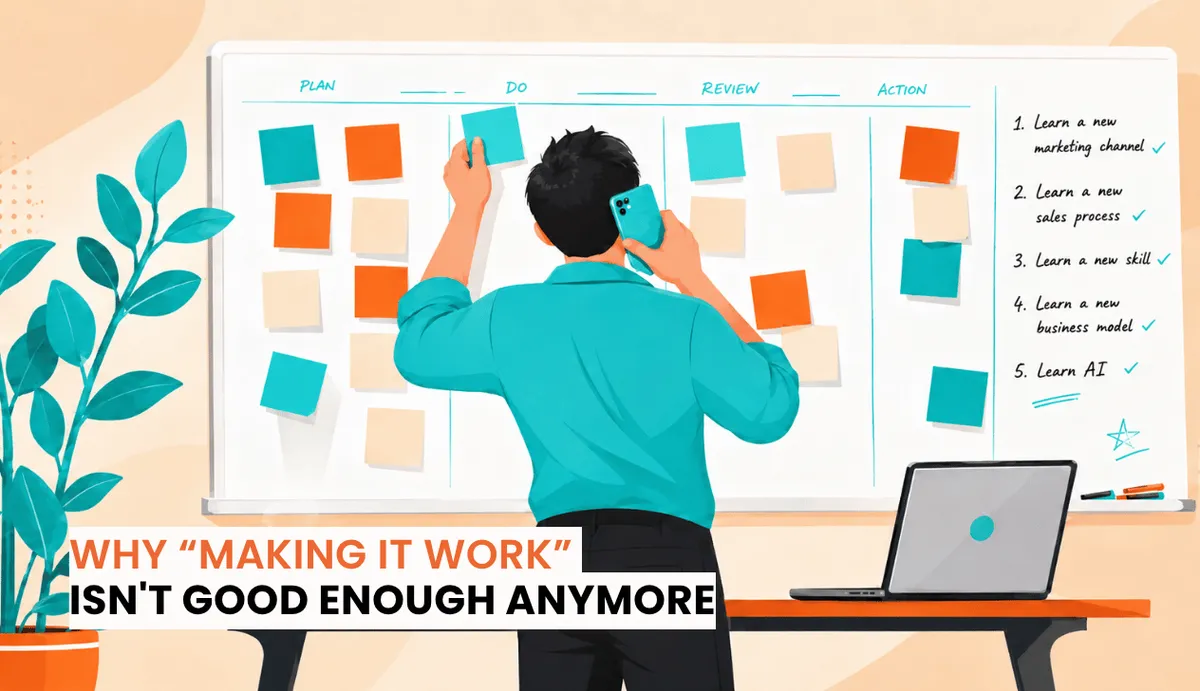
Why “Making It Work” Isn't Good Enough Anymore
One of the questions I was asked recently was:
"What's something you've changed your mind about this year?"
After thinking about it for a while, one answer kept coming back to me.
For years, I believed that if you worked hard enough, spent enough time learning and stayed persistent, you could make almost anything work.
Whether it was a marketing channel, a sales process, a new skill or a business model, my assumption was that if you put the hours in, you would eventually figure it out.
To some extent, I still believe that's true.
Most people can learn almost anything if they are willing to commit enough time and energy to it.
The challenge is that the world has changed.
The question now is not so much whether you can make something work, but whether it’s worth the time it takes to make it work.
The cost of trying to learn everything

A few years ago, if someone wanted to learn SEO, LinkedIn Ads, email marketing, video editing or any number of other skills, I would probably have encouraged them to go for it. The more you understand, the more capable you become, right?
Today, I’m not sure I would give the same advice quite so quickly…
Of course, learning new skills is great, but the challenge now is that all that time spent learning that something new comes with an opportunity cost.
If it takes six months to become competent, what else could you have been doing with that time?
Perhaps you could have generated more revenue, spent more time with clients, strengthened your expertise or focussed on an area where you already have a competitive advantage.
More importantly, will the thing you are learning today even look the same six months from now?
Technology is moving incredibly quickly. AI is reshaping industries, changing how people search for information, altering buyer behaviour and creating entirely new ways of working.
Marketing channels are evolving at a pace that would have seemed ridiculous even a few years ago.
In many sectors, by the time someone has spent months learning a new approach, things have already changed again.
Why specialists matter more than ever

That changes the economics of learning, as well as how businesses should think about expertise.
That’s one of the reasons I’ve become a much stronger believer in specialists.
They spend every day immersed in their particular field. Testing new ideas, spotting trends early, seeing what works and adapting when the market changes.
When things move this quickly, that level of focus becomes incredibly valuable.
I think there was a time when many businesses could afford to be generalists and still stay competitive. Today, it feels much easier to fall behind without even realising it.
The pace of change means that just keeping up is becoming a challenge in itself.
The diversification lesson
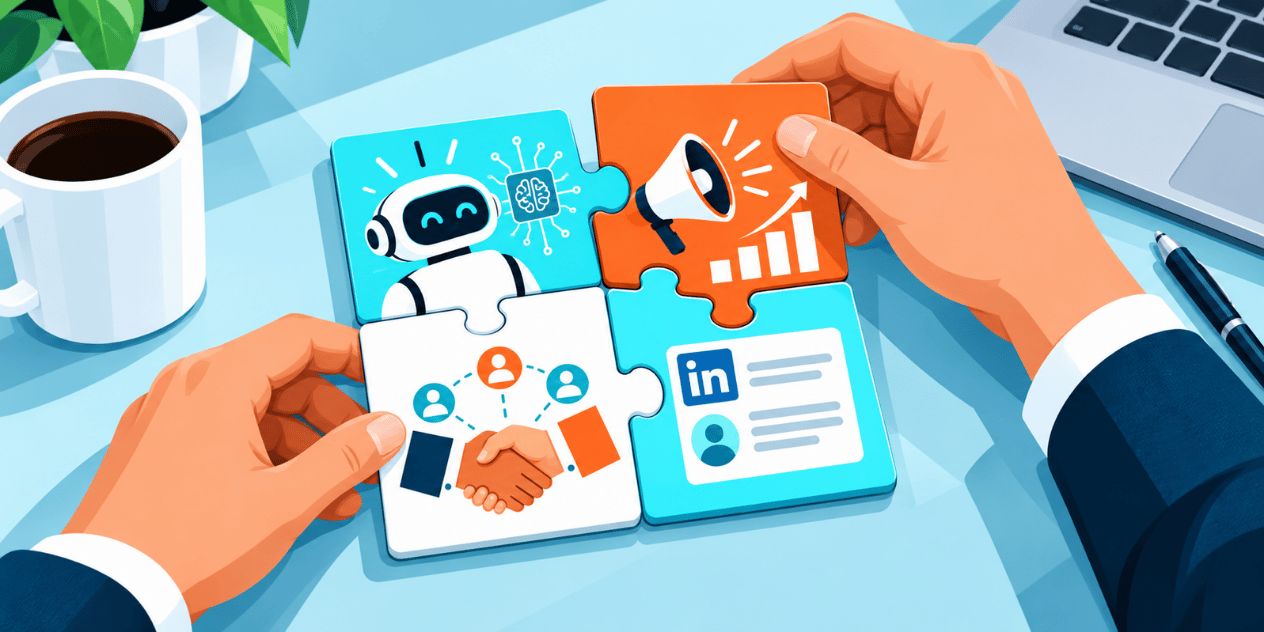
I think this shift is also changing how businesses think about growth.
For a long time, many companies could afford to rely heavily on a single source of opportunities. In professional services, that was often referrals. In other industries, it might have been a particular marketing channel, a flagship product or a single revenue stream that consistently delivered results.
However, relying too heavily on any single source of growth creates vulnerability. Referrals are a great example.
I built my own business largely through referrals in the early years and I still think they’re one of the best forms of lead generation available. The trust is already there, the conversations tend to be easier and the quality is often excellent.
What referrals are not, however, is predictable. More importantly, they’re also not entirely within your control.
Building a business that can adapt
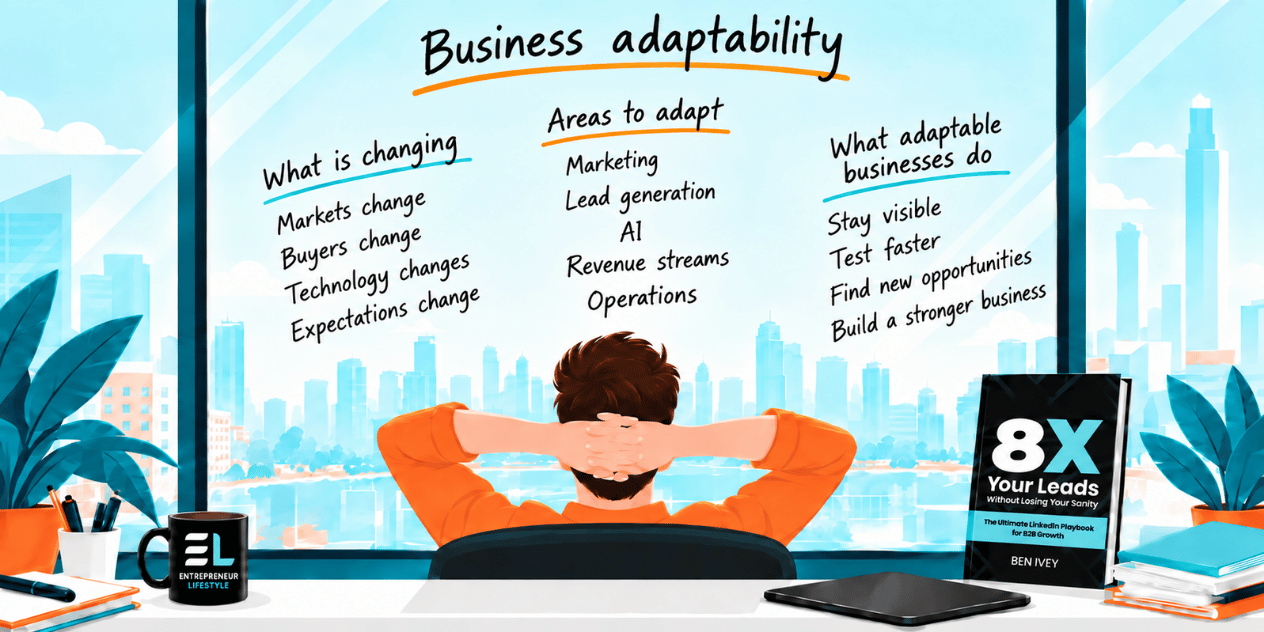
If there’s one trend I’m noticing more and more, it’s that business owners are beginning to recognise the need for diversification.
Whether it’s their marketing, their lead generation or their revenue streams. They’re beginning to recognise how quickly things can change.
AI is changing industries, buyer behaviour is changing and new competitors can emerge faster than ever. These days, platforms rise and fall more quickly than they used to.
As a result, more business owners are beginning to ask: "What happens if my primary source of growth disappears?"
That feels like a much smarter question than it did a few years ago. Today, the goal should be to build a business that can adapt when it arrives.
A final thought

For me, that has probably been the biggest mindset shift of the year.
Making something work is no longer enough.
The real challenge is deciding what deserves your time, attention and energy before the world changes again.
Increasingly, that means focusing on what you do best, working with specialists where it makes sense and building a business that’s resilient enough to thrive regardless of what changes next.
P.S. If you're thinking about how to build a more resilient and predictable lead generation system, check out my book, 8x Your Leads. It explores many of the frameworks we've used to help businesses diversify their growth and generate more consistent opportunities.