The warm audience strategy that makes LinkedIn feel easier in 2026
A lot of businesses are finding LinkedIn harder than it used to be.
Organic reach feels less predictable, cold outreach requires more effort to land well and ad costs naturally rise as more brands compete for the same professional attention. When viewed through the lens of isolated tactics, it can start to feel as though the platform itself is becoming more difficult.
I do not think that is the real issue.
What has actually changed is that LinkedIn now rewards familiarity far more than interruption.
The businesses finding the platform easier in 2026 aren’t the ones relying on one-touch cold lead generation. More often, they are the ones deliberately building warm audiences and then allowing familiarity, trust and timing to do more of the heavy lifting over time.
That strategic shift changes the whole feel of the platform because it replaces friction with recognition.
Why warm audiences change everything
The reason warm audiences matter so much is simple.
Most B2B buyers are not ready the first time they see you.
They may be interested in the topic, recognise the challenge or resonate with the way you think, although that first touchpoint rarely arrives at the exact moment when budget, urgency and internal alignment all happen to be in place.
That is why so many cold campaigns feel harder than they should.
The issue is not necessarily the quality of the targeting. In many cases, it is simply that the buyer needs more time and more exposure before action feels natural.
A warm audience strategy solves that by allowing your thinking to stay visible after the initial interaction. Instead of disappearing after one click, your ideas continue to show up through retargeting, educational ads, thought leadership and lower-friction brand visibility campaigns.
Over time, this repeated exposure turns recognition into trust, and trust dramatically reduces the amount of friction required when the buying moment finally arrives.
What makes LinkedIn feel easier
TThe word I keep coming back to here is ease.
When somebody already knows your brand, has consumed a few useful ideas and has seen multiple proof points over time, the eventual CTA feels dramatically lighter.
The booked call no longer feels like a leap.
The message no longer feels like an interruption.
The sales conversation no longer starts from scepticism.
This is what makes LinkedIn feel easier in 2026.
The platform itself has not become magically simpler. The buyer journey has simply been structured in a way that removes unnecessary cold friction.
That is why businesses that prioritise warm audience development often report that CPL, response quality and conversion confidence all improve at the same time. The system is doing more of the trust-building work before the direct ask ever appears.
How the strategy actually works
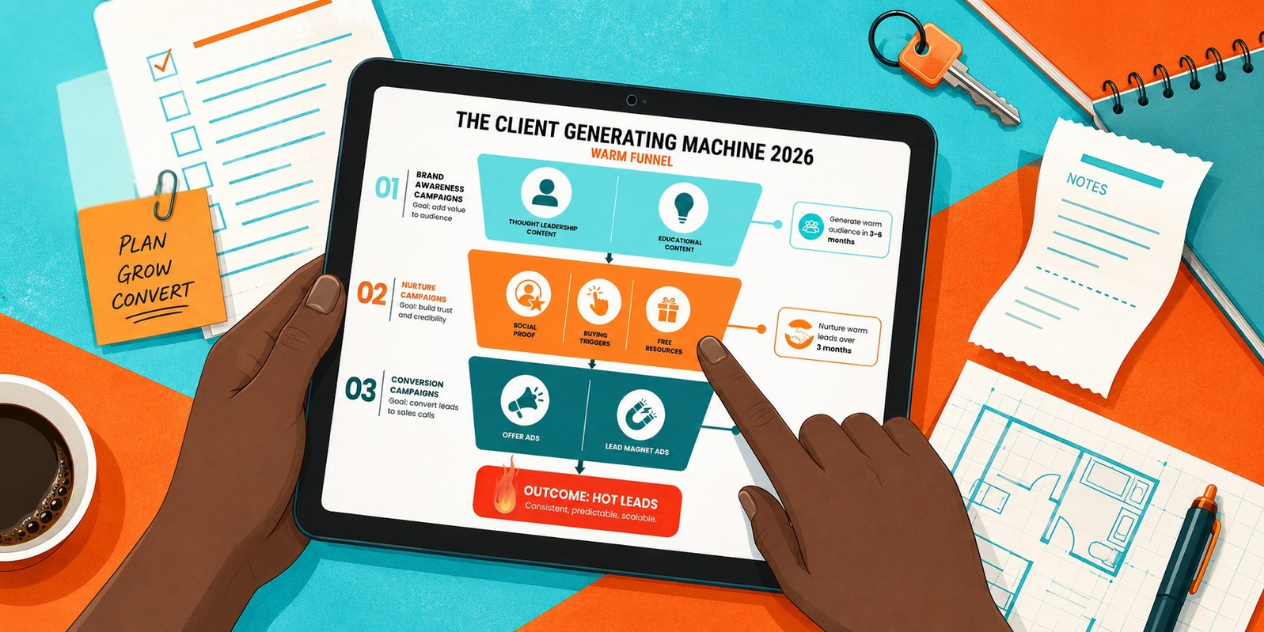
The mechanics are relatively straightforward, although the sequencing matters.
A cold thought leadership or lead magnet campaign creates the first layer of qualified attention.
From there, retargeting keeps the brand familiar through text ads, educational ads, case studies and useful follow-up content that deepens relevance rather than rushing towards the sale.
As that audience warms, the messaging can gradually move towards stronger commercial intent, whether that is a strategy call, webinar, diagnostic or direct service conversation.
What makes this so effective is that every stage respects buyer readiness.
Instead of forcing momentum through repeated cold CTAs, the system allows momentum to build naturally as familiarity compounds.
Why this matters more in 2026 than ever
As LinkedIn becomes noisier, familiarity becomes a stronger competitive advantage.
The brands that stay visible through useful, trust-building touchpoints are far more likely to become the obvious choice when timing and urgency finally align.
That means warm audience strategy is no longer just a retargeting tactic.
It is increasingly becoming the operating system behind how strong B2B LinkedIn growth actually works.
The businesses that understand this stop trying to “win the click” and start designing for repeated commercial memory, which is what makes the eventual conversion step feel so much easier.
A final thought
LinkedIn in 2026 rewards businesses that are remembered.
The easiest path to growth is rarely asking colder audiences to make bigger decisions faster.
The easier path is creating enough repeated value, visibility and familiarity that the eventual decision feels like the natural next step.
That is the real power of a warm audience strategy.
It makes LinkedIn feel easier because your buyers no longer feel like strangers by the time they are ready to move.