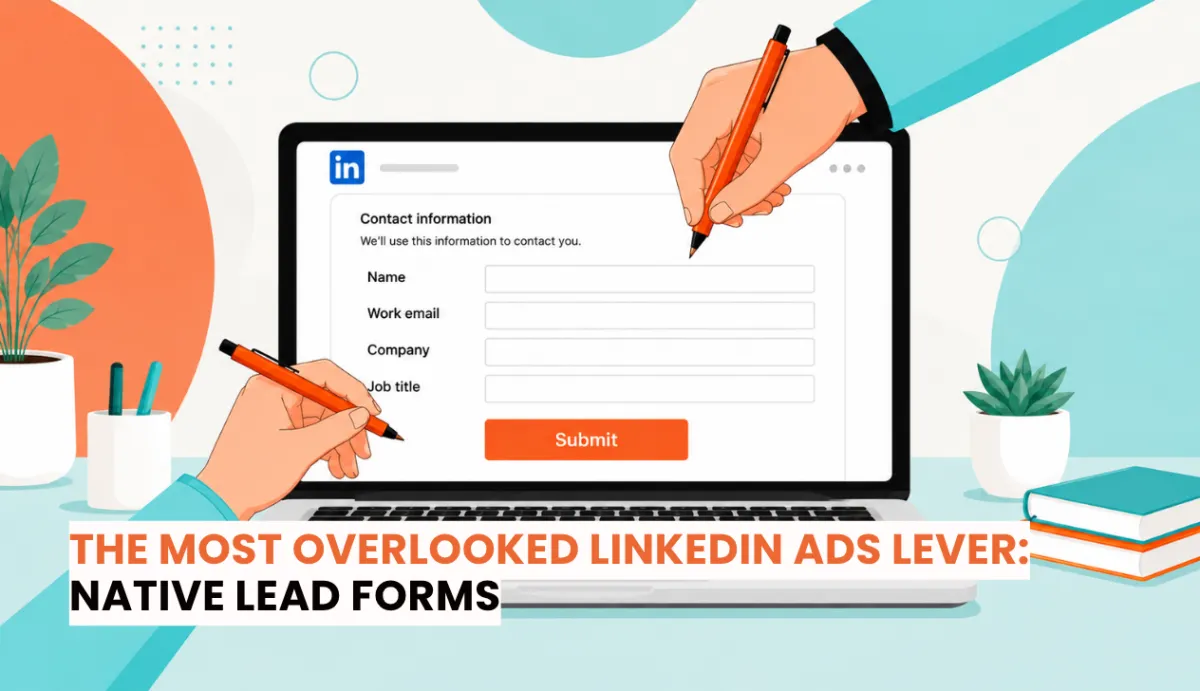
The most overlooked LinkedIn Ads lever: native lead forms
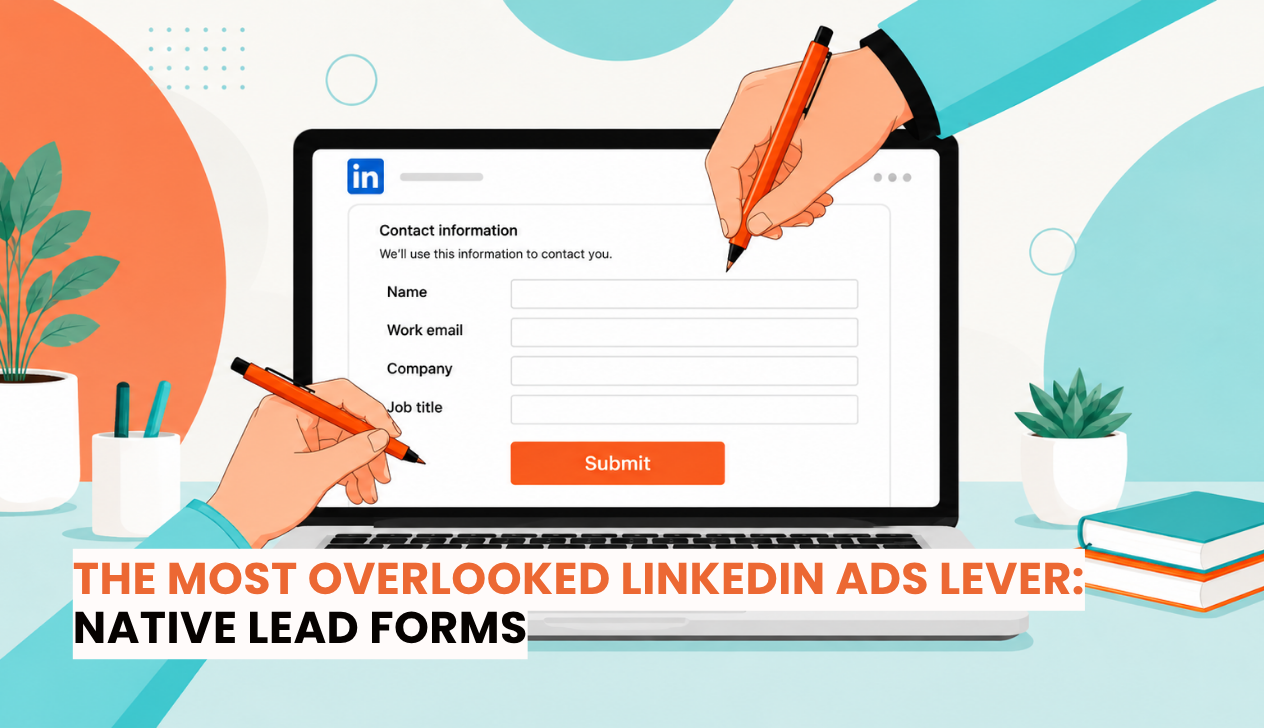
A lot of LinkedIn Ads campaigns lose momentum in a place most businesses barely think about.
It is not usually the audience, the offer or even the creative.
The real drop-off happens in the handover between interest and action, in the tiny moment where someone has decided they want the thing you are offering and is suddenly asked to leave the platform, wait for a landing page to load, fill out a form and decide whether the effort still feels worth it.
That small amount of friction quietly kills more conversions than most people realise.
This is why LinkedIn’s native lead gen forms remain one of the most overlooked levers in the entire ad system. They remove the break in momentum by allowing somebody to convert inside the same environment where their interest was created in the first place.
Why friction is the real conversion killer

One of the biggest mistakes businesses make is assuming conversion drop-off is caused by weak intent.
Sometimes that is true, although more often the problem is simply that the path became too awkward.
The moment someone is redirected away from LinkedIn, even to a perfectly good landing page, you introduce a surprising number of opportunities for momentum to disappear. Load time, distractions, second thoughts, poor mobile experience or just the psychological interruption of changing environments can all reduce the likelihood of action.
Native lead forms solve that by keeping everything inside LinkedIn.
The interest is created in-feed, the click happens in-feed and the conversion happens in-feed.
That continuity is incredibly powerful because it preserves the natural flow of the buyer’s attention.
Why they convert better than most landing pages

The hidden strength of native forms is how little effort they require from the user.
In most cases, LinkedIn automatically pre-fills the person’s name, email, company and role information. Instead of asking them to manually complete fields, the platform simply asks them to confirm details that are already there.
That one design decision removes a huge amount of unnecessary resistance.
In B2B, where the click is often coming from a busy decision-maker between meetings, reducing that effort can dramatically increase conversion rates.
The easier the next step feels, the more likely it is to happen while the interest is still warm. That is exactly why this lever so often outperforms more complex landing-page funnels for lead magnet and diagnostic campaigns.
Where this works best in the funnel

Native lead forms work especially well in the Attract phase of the ADS framework, where the real goal is earning qualified attention from the right decision-makers as efficiently as possible.
Lead magnet ads are the obvious use case because the value exchange is clear and immediate. A guide, checklist, framework or short training can be delivered quickly without forcing the buyer through extra layers of friction.
They also work beautifully for early-stage diagnostics, consultations and strategic audits, particularly when trust has already been partially established through thought leadership or retargeting.
The common thread is simplicity.
The more obvious the value exchange, the more powerful the native form becomes.
Why most businesses still overlook this

I think this gets overlooked because people often assume a “real” funnel needs a landing page.
There is a belief that more pages, more copy and more design somehow creates more credibility.
Sometimes that is true later in the buyer journey, although for many LinkedIn campaigns the real commercial win comes from reducing steps rather than adding them.
Native forms are one of the cleanest examples of this.
By removing unnecessary transitions, they protect the buyer’s momentum and let the value exchange happen while intent is still fresh.
That is often far more commercially useful than sending someone into a beautifully designed page that introduces just enough delay for them to move on.
What this changes in your ad strategy

Once you understand the role of native forms, campaign planning becomes much simpler.
The goal is no longer to build the most elaborate funnel.
The better question becomes: where can we remove unnecessary friction without reducing trust?
For most lead magnet, educational and early-stage consultation offers, LinkedIn’s native lead forms answer that beautifully.
They make the path from interest to action shorter, smoother and more aligned with how busy professionals actually behave on the platform.
That is why they remain one of the most commercially underrated levers in LinkedIn Ads today.
A final thought

A lot of funnel performance issues are really friction issues in disguise.
Native lead forms solve one of the biggest of those problems by letting your audience take action in the same moment they feel the value.
When that handover becomes easier, conversion becomes easier too.
Sometimes the most overlooked growth lever is simply making the next step feel obvious.